

This post was originally published on this site.
Vegvisir, an Estonian defence technology company building the command-and-control software layer for the multi-domain battlefield, today announced a venture investment from Iron Wolf Capital (IWC).
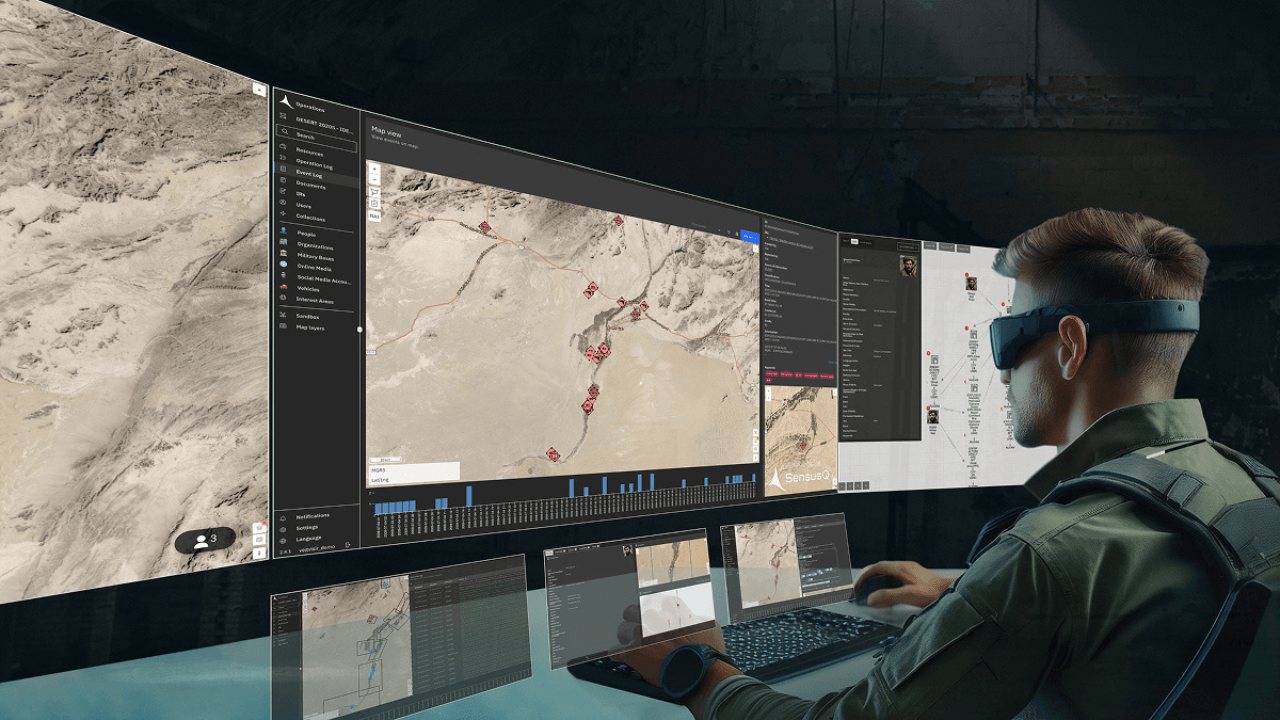
Vegvisir’s platform addresses one of the most pressing unsolved problems in modern warfare: the absence of a unified, interoperable software layer capable of connecting, visualising, and commanding manned and unmanned systems across ground, air, maritime, and sub-sea domains at operational scale.
Unmanned systems have moved from experimental to operational across allied armed forces, but the command-and-control infrastructure required to exploit them effectively remains fragmented, proprietary, and platform-specific. Vegvisir is building the connective layer that bridges that gap: a software-native, platform-agnostic operational interface with AI-driven detection and decision support built in from the ground up — designed to reduce cognitive load on operators managing assets across multiple domains simultaneously.
The company’s long-term ambition is to become to allied warfare what air traffic control became to global aviation – the single command interface through which all actors, assets, and decisions flow, regardless of origin or nationality. Proprietary, fragmented command architectures are the single largest obstacle to effective multi-domain operations. Vegvisir intends to make them obsolete.
According to Ingvar Pärnamäe, Co-Founder and CEO of Vegvisir, this investment marks the beginning of the company’s next phase, moving from deep product development into operational deployments and commercial scale.
“Iron Wolf Capital understands the problem we are solving at a level that goes beyond the financial opportunity. Their footprint at the front line of NATO’s Eastern Flank, and their relationships across Baltic and Central European defence and policy circles, give us a strategic amplifier that capital alone cannot buy.
This is the partnership we were looking for,”
The investment draws strong validation from Vegvisir’s existing shareholder base, including Kuldar Väärsi, CEO of Milrem Robotics, one of Europe’s foremost developers of unmanned ground systems and a key participant in NATO’s robotics and autonomous systems programmes, and a personal investor in Vegvisir.
“Milrem is building the software-defined robotic systems that future forces will depend on. Vegvisir is building the software layer that makes those systems operationally more capable and easier to adapt. My investment in Vegvisir has always reflected the belief that the future battlefield will be dominated by software-defined systems in which different products and technologies will be interoperable through a shared architecture. The team at Vegvisir has the technology and the ambition to own a software layer which makes the adaptation of robotics seamless at the alliance level,” shared Väärsi.
Iron Wolf Capital views Vegvisir as the software layer for future warfare, connecting and multiplying the value of the physical systems that the broader ecosystem is developing.
“We invest where technology meets an irreversible shift in how the world operates. The transition to multi-domain unmanned operations is exactly that kind of shift, and it demands a software-native, platform-agnostic solution that no existing player has adequately built. Vegvisir has the architecture, the team, and the ambition to own that space. We believe that over the next decade, Vegvisir can become one of the defining names in European defence technology, and this investment is our commitment to helping them get there,” said Kasparas Jurgelionis, Managing Partner at Iron Wolf Capital.
The investment will accelerate Vegvisir’s product development, deepen integrations with allied unmanned platform providers, and expand its pipeline with commercial and government customers across NATO member states.